
Power Transformer
Strengthen your transmission infrastructure with Deaton Equipment’s line of high voltage power transformer. Engineered for critical grid substations and heavy industrial applications, these units are designed to handle massive power loads with exceptional efficiency and thermal stability.
Our HV power transformers feature advanced core geometry to minimize no-load losses and noise. Whether you need a step-up unit for power generation or a step-down transformer for transmission interconnection, Deaton delivers precise vector groups and impedance voltages matched to your existing network.
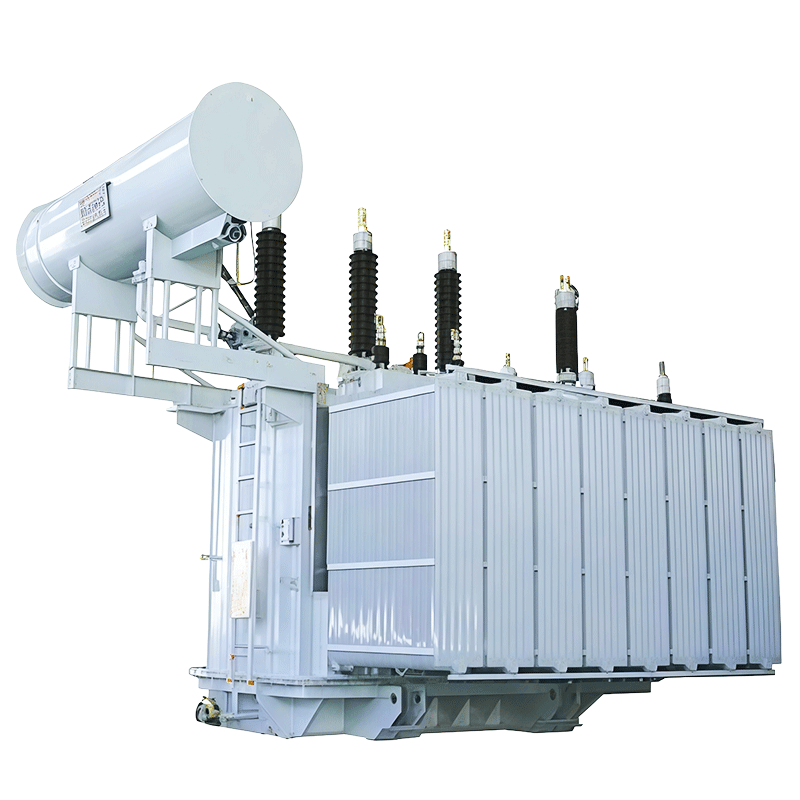
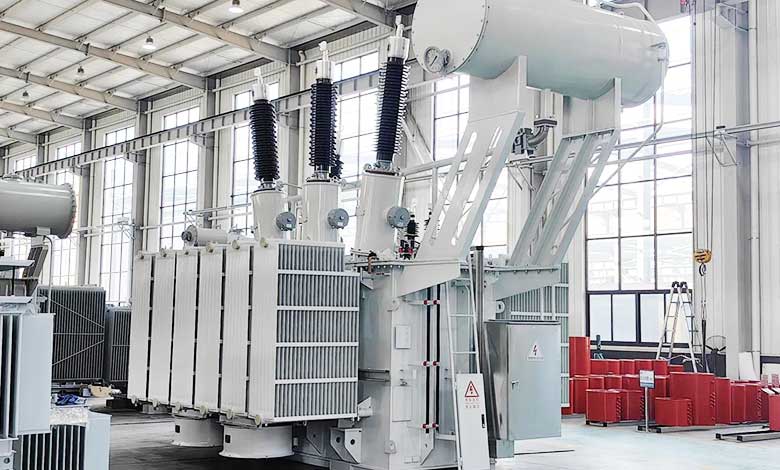
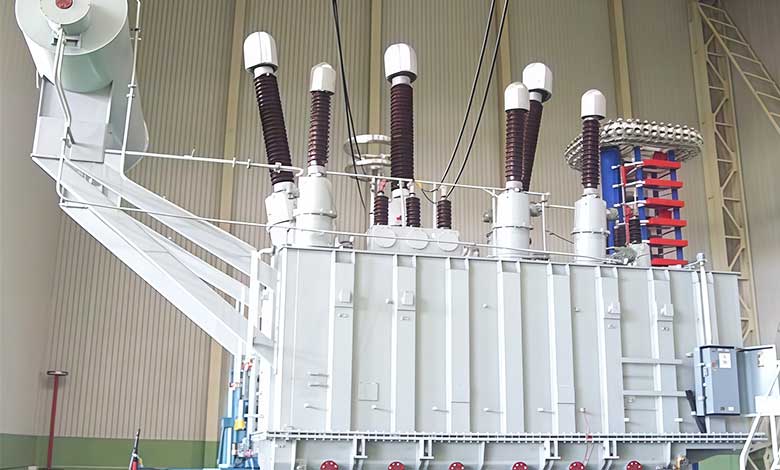
Featuring a hermetically sealed tank and premium copper windings, Deaton power transformer offers low losses and high reliability. Ideal for utility grid expansion, power plants, industrial complexes, mining substations, renewable energy interconnection, or large infrastructure projects.
Backed by over two decades of precision manufacturing experience, we engineer these massive units to serve as the reliable backbone of utility grids and heavy industrial complexes worldwide.
Our design philosophy prioritizes long-term operational stability. We utilize advanced core modeling software to minimize hysteresis losses and optimize the magnetic flux distribution, ensuring our transformers operate with exceptional efficiency and minimal noise.
Power Transformer Specifications
| Rated Capacity (KVA) | Combination and Tap Range | Connection Group Symbol | No-load Loss (W) | Load Loss (W) | No-load Current (%) | Short Circuit Impedance (%) | ||
| High voltage (KV) | Medium Voltage(KV) | Low voltage(KV) | ||||||
| 6300 | 110 121 ±2*2.5% | 36 37 38.5 | 6.3 6.6 10.5 21 | YNyn0d11 | 8900 | 44000 | 0.66 | Step-up High-Medium 17.5-18.5, High-Low 10.5, Medium-Low 6.5 Step-down High-Medium 10.5, High-Low 18-19, Medium-Low 6.5 |
| 8000 | 1060 | 53000 | 0.62 | |||||
| 10000 | 1260 | 63000 | 0.59 | |||||
| 12500 | 1470 | 74000 | 0.56 | |||||
| 16000 | 1790 | 90000 | 0.53 | |||||
| 20000 | 2110 | 106000 | 0.52 | |||||
| 25000 | 2460 | 126000 | 0.48 | |||||
| 31500 | 2940 | 149000 | 0.48 | |||||
| 40000 | 3480 | 179000 | 0.44 | |||||
| 50000 | 4160 | 213000 | 0.44 | |||||
| 63000 | 4920 | 256000 | 0.4 | |||||
Why Choose Deaton Power Transformer?
We offer a holistic engineering partnership, customizing critical parameters like short-circuit impedance and vector groups to guarantee seamless integration with existing network infrastructure, delivering a robust power solution.
Step up voltage (e.g., 10.5kV → 220kV/500kV) to drastically reduce current, cutting transmission line losses by 90%+ and enabling efficient power delivery across hundreds of kilometers.
Support voltage regulation, fault isolation, and load balancing. On-load tap changers allow real-time voltage adjustment, ensuring stable power supply for grids, industrial plants, and renewable energy farms.
Utilize CRGO silicon steel cores and high-purity copper/aluminum windings to cut no-load/load losses by up to 30%. This reduces long-term operational costs and aligns with global energy efficiency standards
Global Cases
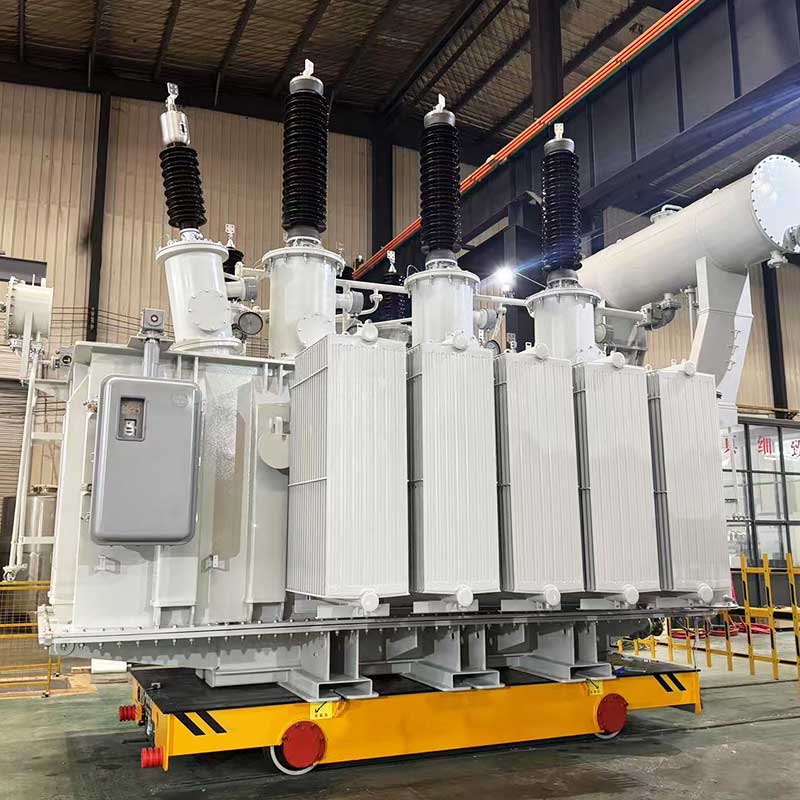
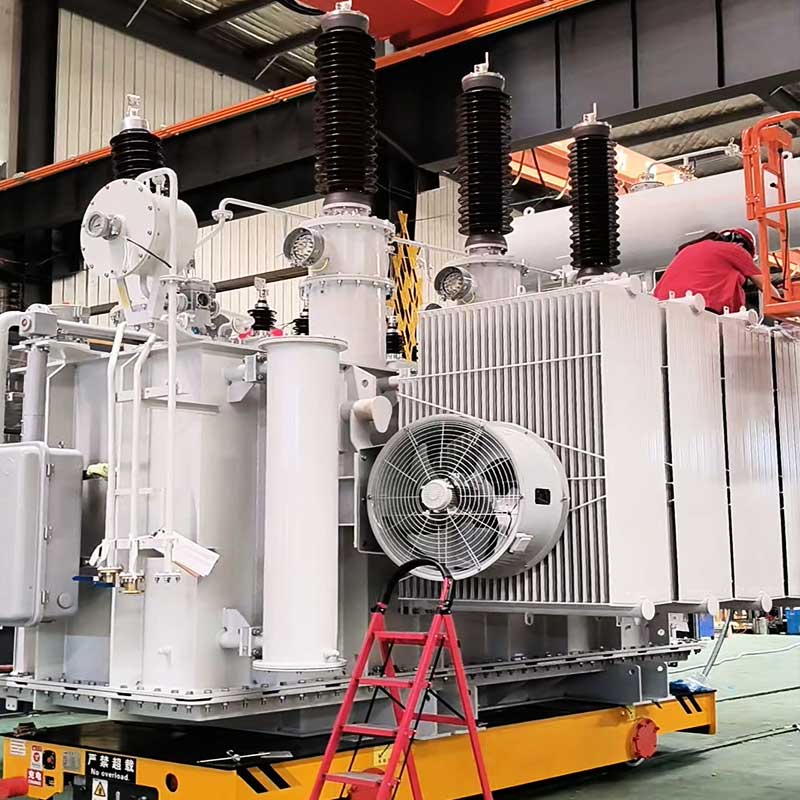
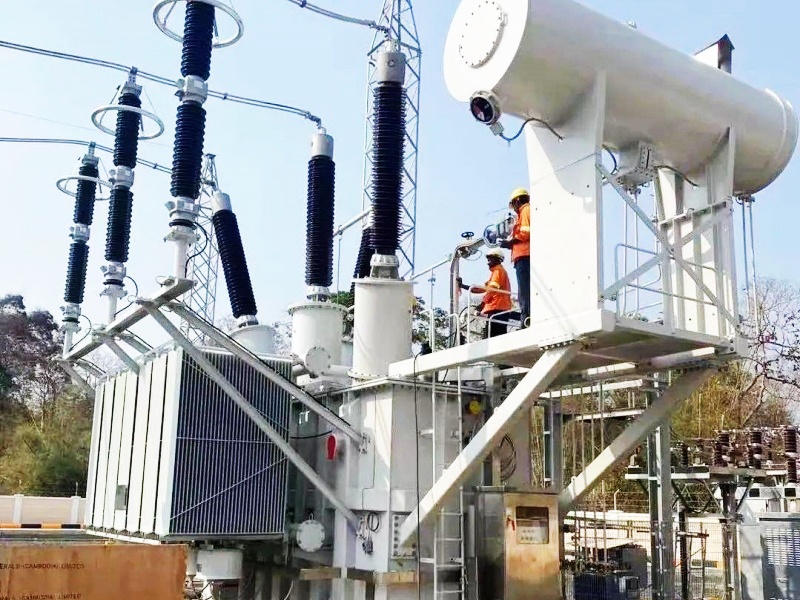
Power Transformer to Saudi Arabia
Deaton is preparing to ship a massive high voltage power transformer to a major utility project in Saudi Arabia.
This heavy-duty unit is engineered specifically for the extreme thermal demands of the Middle Eastern desert. It features a robust ONAF cooling system, equipped with extensive radiator banks and large industrial fans to ensure optimal heat dissipation even during peak summer temperatures.
The transformer is also outfitted with a precision on-load tap changer for dynamic voltage regulation and high-creepage porcelain bushings to prevent flashovers caused by sand and dust accumulation.
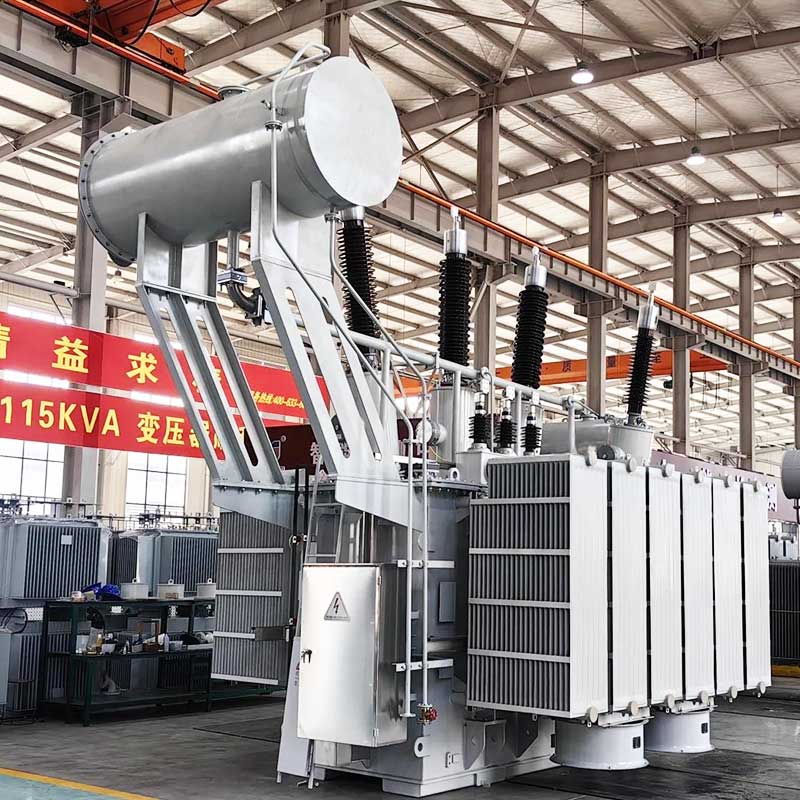
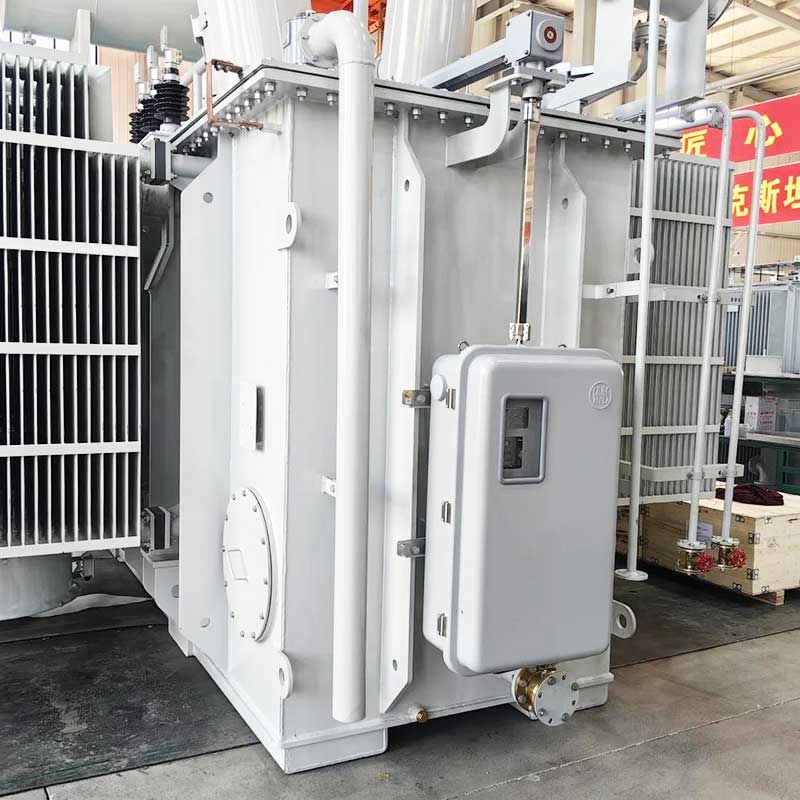
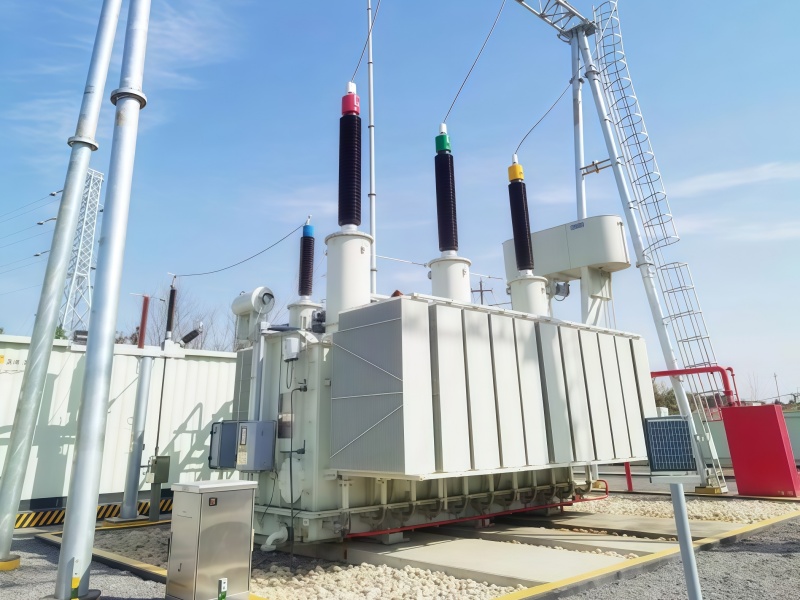
Power Transformer to Kazakhstan
Deaton has successfully executed the manufacturing and delivery of a high-capacity power transformer for a strategic grid expansion project in Kazakhstan.
Engineered to withstand Central Asia’s extreme continental climate, the transformer features a robust, weather-resistant tank and a high-efficiency detachable radiator system capable of operating reliably in temperature variations ranging from freezing winters to scorching summers.
After passing comprehensive high-voltage and leak testing, this delivery cements Deaton’s role as a reliable partner for critical high-voltage infrastructure across the CIS region.
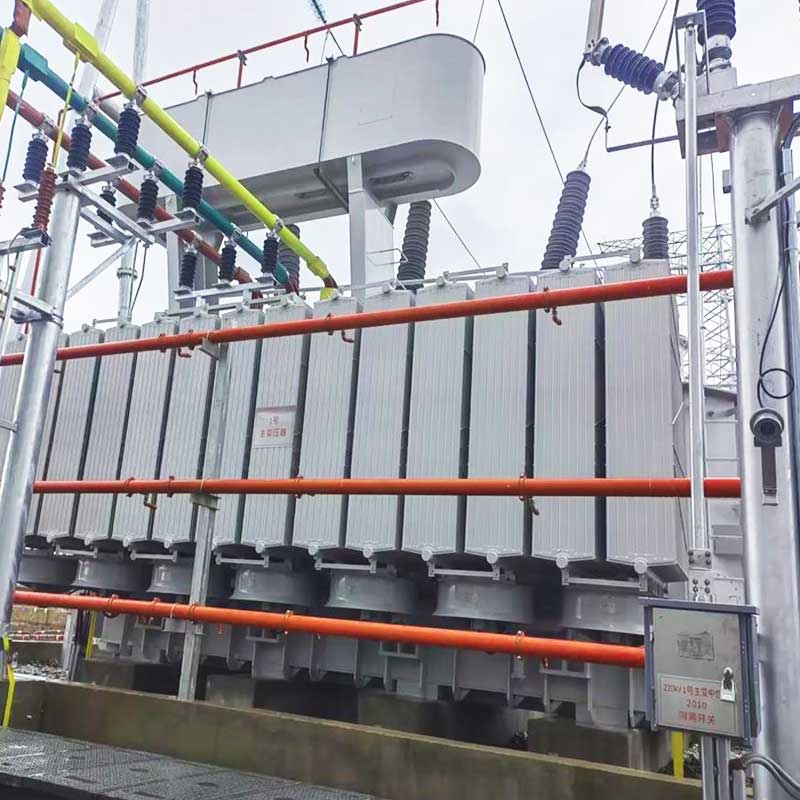
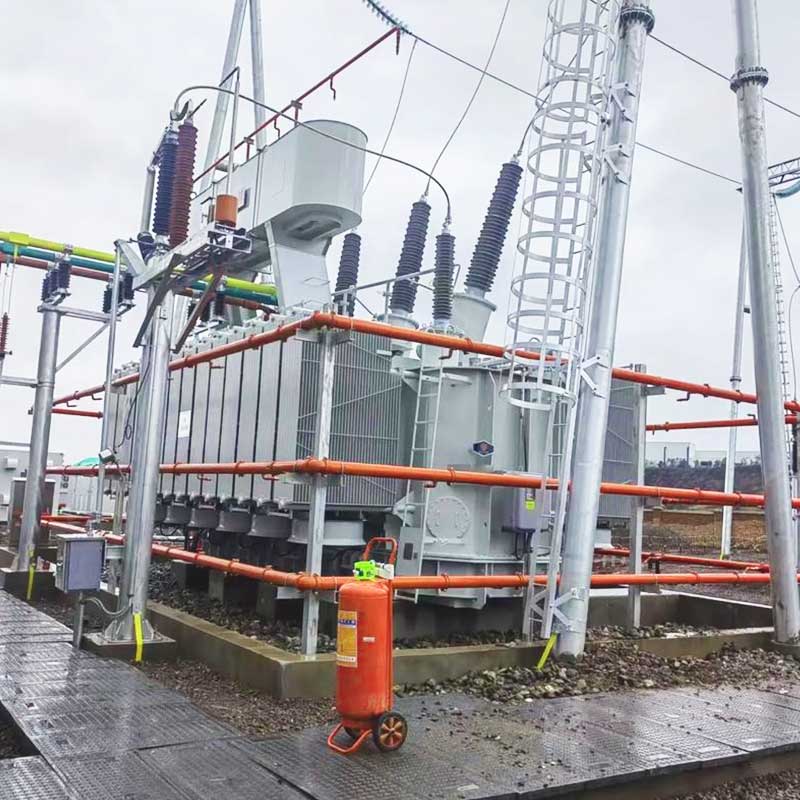
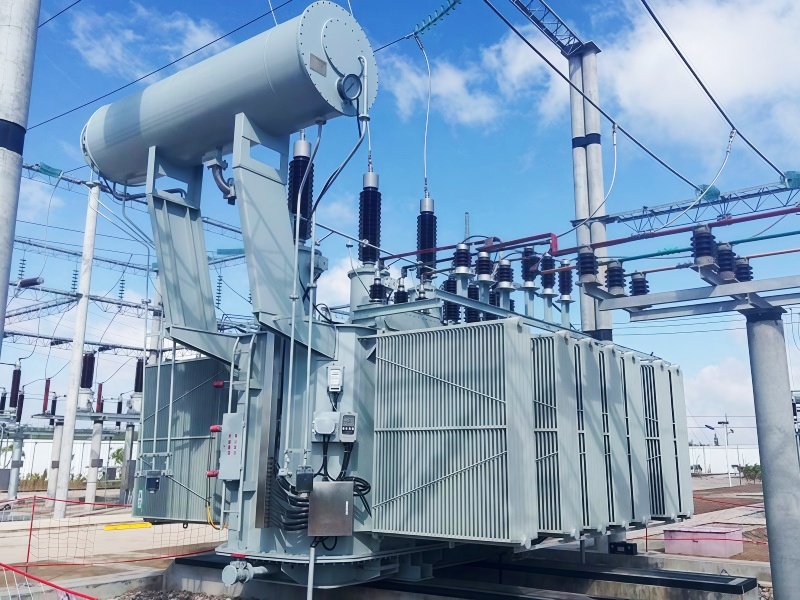
Power Transformer in Zimbabwe
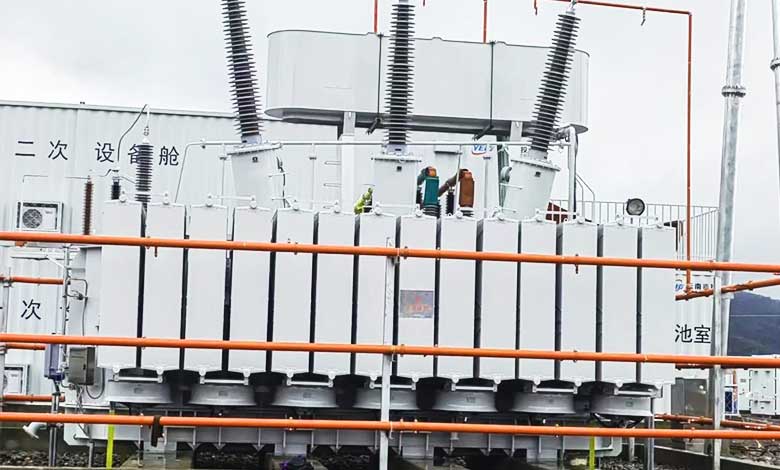
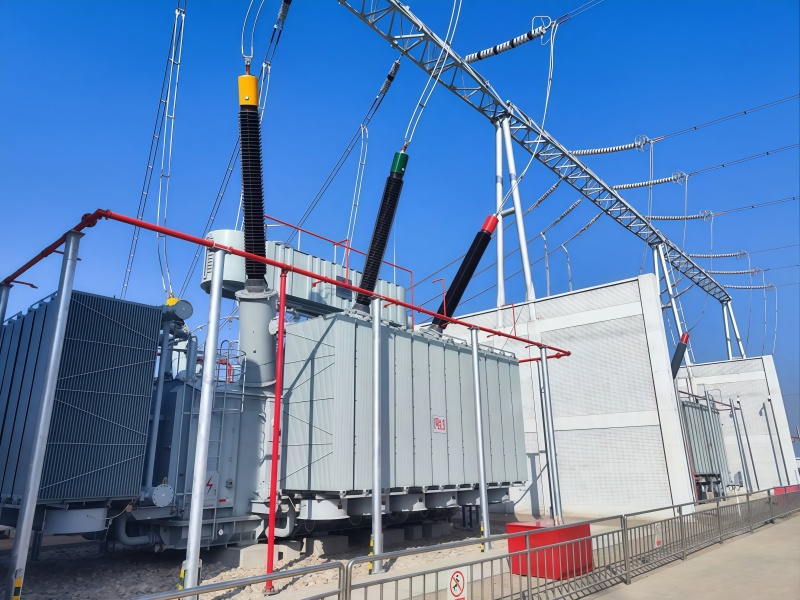
Deaton has successfully installed and energized of a high-capacity high voltage power transformer in Zimbabwe. Designed to support the region’s critical utility grid, this heavy-duty unit is currently in full operation, providing essential stability to local mining and industrial sectors.
A standout feature of this installation is the integrated fire suppression piping network—visible as the orange/red perimeter pipes—which was custom-designed to meet strict substation safety protocols, ensuring rapid response in emergency scenarios.
Since its commissioning, the transformer has delivered consistent, low-loss power transmission.
What Is A Power Transformer?
A high voltage power transformer is a massive, static electrical machine used primarily in transmission networks to transfer huge amounts of electrical energy between circuits. Unlike smaller distribution transformers seen on utility poles, these units are the “heavy lifters” of the electrical grid, typically handling voltages from 69kV up to 220kV (and beyond) and power ratings from 10 MVA to over 100 MVA.
They are almost exclusively oil immersed, meaning the core and coils are submerged in insulating oil to manage the immense heat and high-voltage stress generated during operation.
The functions of the power transformers are:
- Step-Up (Generation): Located at power plants, they increase low voltage (e.g., 20kV) to high voltage (e.g., 220kV). This allows electricity to travel hundreds of kilometers across transmission lines with minimal energy loss.
- Step-Down (Transmission/Substation): Located at electrical substations near cities or industrial parks, they decrease the high transmission voltage back down to lower levels (e.g., 33kV or 11kV) so it can be safely distributed to factories and homes.
Power Transformer Core Component Basics
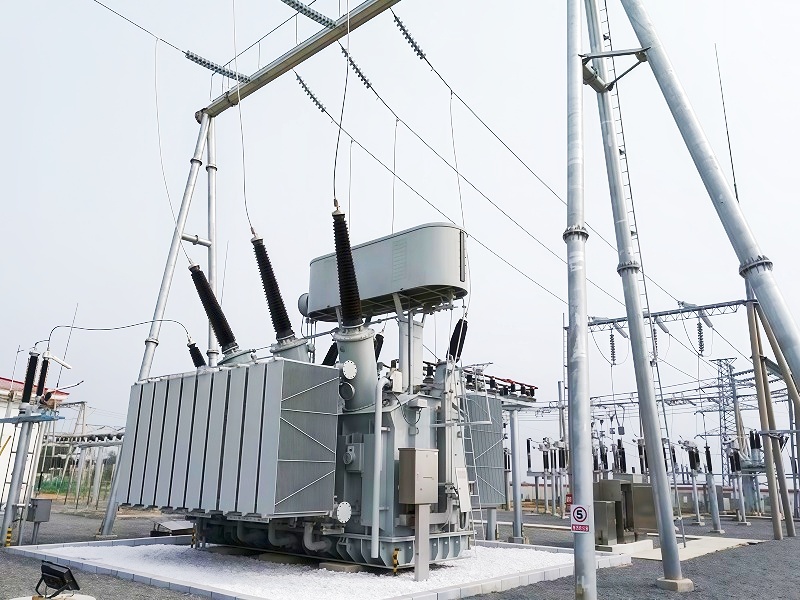
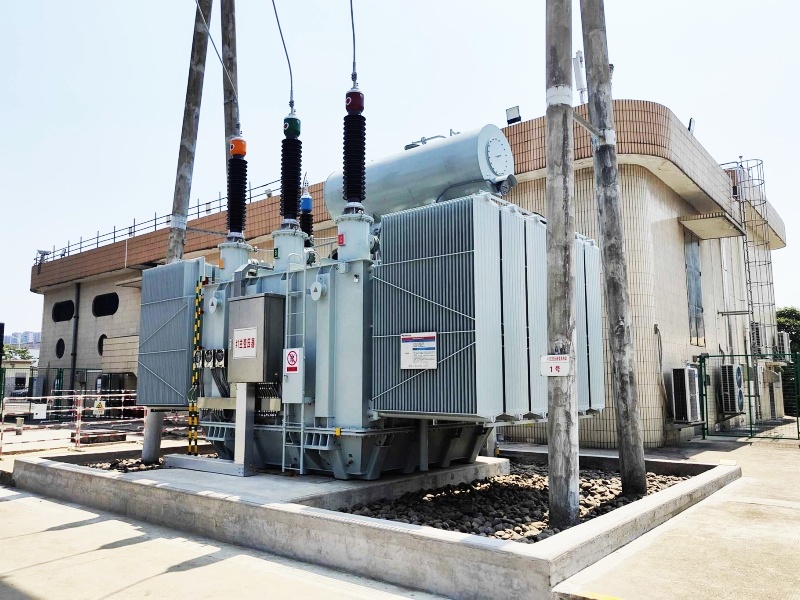
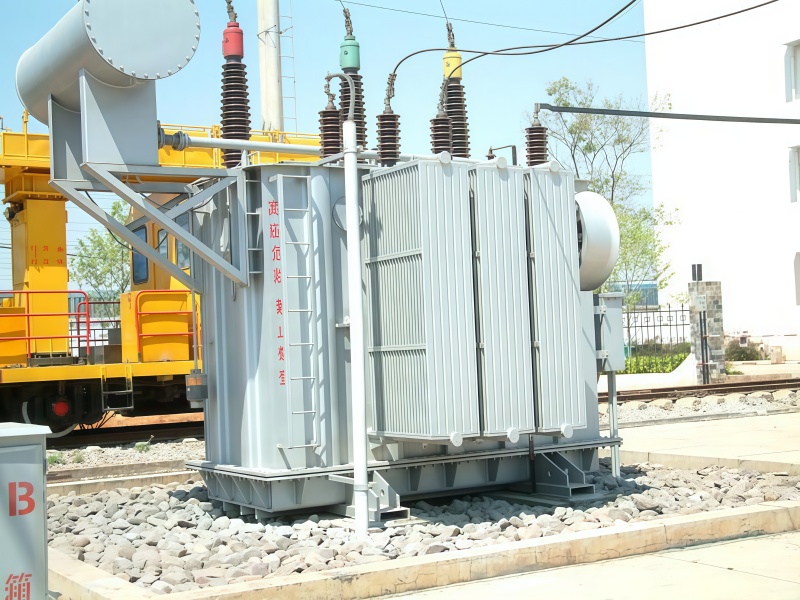
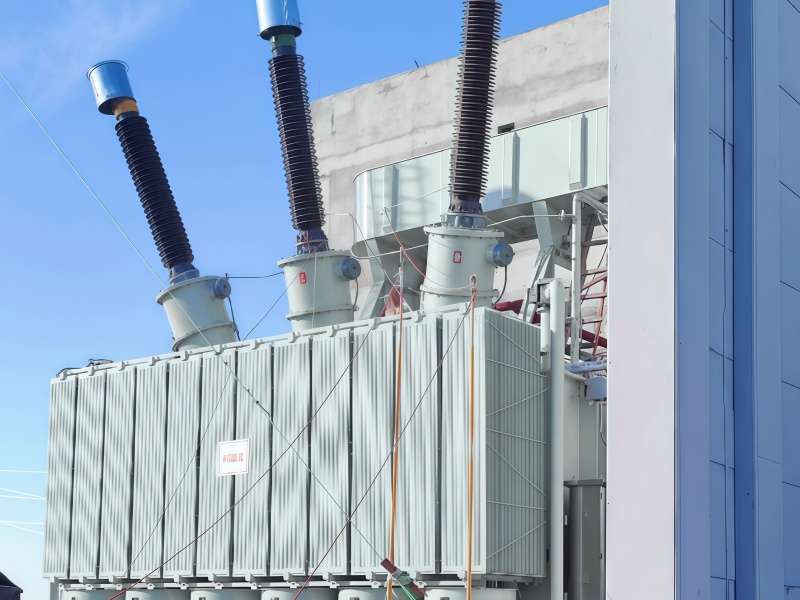
High-Voltage Bushings: The large, insulated “horns” on top that connect the transformer to high-voltage transmission lines.
Cooling System: Because they handle massive power loads, they use advanced cooling methods like ONAF using radiators and heavy-duty fans.
On-Load Tap Changer: A complex mechanism that mechanically adjusts the voltage ratio while the transformer is running, ensuring the grid voltage remains stable even as demand fluctuates.
Conservator Tank: An expansion tank on top that allows the oil to expand and contract as the temperature changes without exposing it to moisture in the air.
Advantages Of Power Transformer
Here are the primary advantages of high voltage power transformer units, typically used in transmission networks and heavy industry.
1. Efficient Long-Distance Transmission
The single biggest advantage of a power transformer is its ability to facilitate long-distance energy transfer.
- Reduced Line Losses: By stepping up voltage (e.g., from 13.8kV to 220kV), the current traveling through the transmission lines is drastically reduced. Since energy loss is proportional to the square of the current, stepping up the voltage virtually eliminates energy waste over hundreds of kilometers.
- Infrastructure Savings: Lower current means utility companies can use thinner, lighter, and less expensive cables, significantly reducing the cost of building the grid.
2. Dynamic Voltage Regulation
Unlike smaller transformers, most Power Transformers are equipped with on-load tap changer.
- Grid Stability: An OLTC allows the transformer to mechanically adjust its turn ratio while energized and under load. This means grid operators can compensate for voltage drops during peak demand hours without interrupting power supply, ensuring stable voltage reaches homes and factories.
3. Extremely High Efficiency
- 99%+ Efficiency: When fully loaded, Deaton’s well-engineered power transformer operates at 99.5% efficiency or higher. This means almost all the power put into the primary side comes out of the secondary side, with very little energy lost as heat.
4. Galvanic Isolation
Power transformers provide electrical isolation between the source (generation) and the load (distribution).
- Safety & Protection: This isolation protects downstream equipment from direct fault currents and prevents DC noise from the generation side from interfering with the distribution network. It also allows for different grounding systems to be used on the primary and secondary sides.
5. Durability and Low Maintenance
Despite handling massive amounts of energy, power transformers are rugged static devices with few moving parts (mostly just the fans and pumps).
- Long Lifespan: A properly maintained oil-immersed power transformer is designed to last 25 to 30 years or more.
- Environmental Resilience: They are hermetically sealed or equipped with conservators to withstand rain, dust, snow, and extreme heat, making them suitable for outdoor installation in any climate.
6. High Power Density
A single power transformer unit can handle immense loads—often 10 MVA to 100+ MVA. To handle this same load using smaller distribution transformers would require acres of space and complex cabling. Power transformers concentrate this capacity into a single, manageable footprint.
What Are The Common Applications Of Power Transformer?
High voltage power transformers are massive, critical assets used in specific, secured locations where huge amounts of energy must be managed.
Here are the primary locations and sectors where HV Power Transformers are deployed:
1. Electrical Utility Grid Nodes
This is the most common location. The national power grid relies on these transformers at every stage of the journey.
- Generation Stations (Step-Up): Located directly at thermal, nuclear, or hydroelectric power plants. They sit between the generator and the transmission lines to boost voltage for long-distance travel.
- Transmission Substations (Interconnection): Located at major grid intersections. These act as “traffic hubs,” transferring power between different high-voltage transmission lines (e.g., transferring power from a 220kV line to a 110kV line).
- Main Sub-Transmission Substations (Step-Down): Located on the outskirts of cities or large towns. They take the high transmission voltage and step it down to medium voltage (e.g., 33kV) to feed local distribution substations.
2. Energy-Intensive Industrial Complexes
Heavy industries often consume as much power as a small city. To get cheaper rates and stable power, they build their own private HV substations on-site.
- Steel & Aluminum Mills: To power massive electric arc furnaces and smelters.
- Mining Operations: Located in remote areas, mines use HV transformers to power giant crushers, hoists, and ventilation systems.
- Oil & Gas Refineries: To power heavy-duty compressors and pumps required for chemical processing.
- Pulp & Paper Mills: For running large-scale mechanical pulping machinery.
3. Renewable Energy Parks
Utility-scale renewable projects are essentially decentralized power plants that require HV connection points.
- Solar Farms: A central substation transformer collects all the power from the solar field and steps it up to grid voltage (e.g., 110kV or 220kV) for export.
- Wind Farms: Both onshore and offshore wind parks use power transformers to consolidate energy from individual turbines and push it onto the main transmission network.
4. Hyperscale Data Centers
Modern data centers for tech giants consume massive amounts of electricity.
- Private Substations: Instead of relying on local city power lines, these facilities often have dedicated 110kV or 132kV substations on their campus to ensure 99.999% uptime and handle the immense cooling and server loads.
5. Railway Traction Substations
- Electric Rail Systems: High-speed trains and heavy freight rail networks require dedicated substations along the track. These transformers convert high voltage from the utility grid into the specific voltage required for the overhead catenary lines that power the trains.